
EQ improves clarity on dialogue — but it can also bring a character closer to the audience.
Knowing how to do it is one thing.
Knowing when and why is what turns it into a storytelling decision.
THE CRAFT
THE WHY
In practice, sound decisions are rarely technical problems alone. They’re shaped by story, perspective, collaboration, and constraint.
The gap between using tools and making decisions with them is where most confusion starts.
I founded Full-Scale Sound to bridge a gap I experienced firsthand — between how sound is taught and how it’s practiced in the industry.
THE WHAT
Knowing the tools is only part of understanding the craft.
Learning how to edit dialogue, design sound, or approach a mix is one thing.
Understanding how those processes connect — how an editorial decision shapes the mix, how a technical choice changes perspective, and how sound influences the audience's experience — is another.
Full Scale Sound brings these disciplines together.
The masterclasses explore the relationship between creative intention, technical execution, and professional workflow.
Each subject is explored through the decisions, techniques, and workflows that bring creative intentions to life.
THE APPROACH
Three core principles guide every masterclass.
Aesthetics & Storytelling
Understanding why a choice works — not just that it does. When you know how sound shapes emotion and perspective, decisions stop feeling arbitrary.
Technique
Knowing the tools well enough that they disappear. Technique stops being something you think about — and becomes the way intention is executed.
Workflow
Structure that protects creative focus. The right workflow keeps decisions clear, reduces second-guessing, and allows you to collaborate without losing direction, keeping attention where it belongs — on the story.

These aren’t abstract principles.
They’re what I come back to in every project — and what I wish I’d been given earlier.
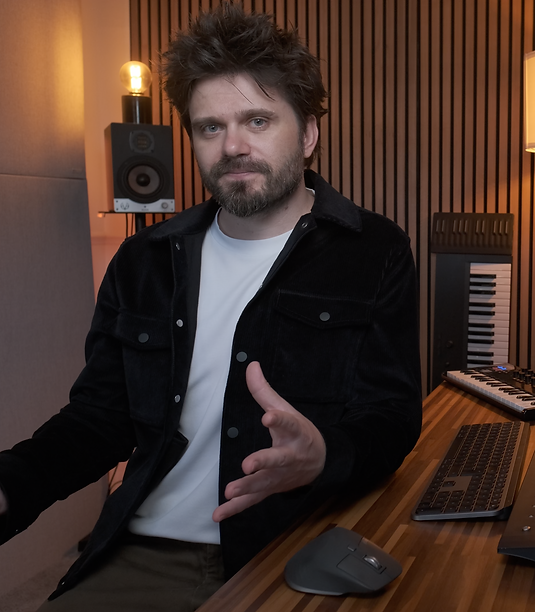
WHO IS THIS GUY
Nick Sounidis —
half Greek, half sound guy.
Years spent in the room — getting it wrong, learning why, and getting it right often enough to teach it.
I'm a London-based sound designer and re-recording mixer, working across film, commercial productions, and the wider audio post-production process — from recording on set through to the final mix.
My journey into sound started with music. Before I ever touched a dialogue track, I was studying composition, rhythm, structure, and the relationship between sound and emotion.
That foundation shaped how I approached audio post-production.
Over the years, I've worked in recording studios, editing rooms, and mixing theatres, collaborating with filmmakers, directors, and brands. Along the way, I completed a Master's in Sound and Post-Production, combining formal education with years of practical experience.
But some of the most valuable lessons came from the work itself. From sessions that didn't go to plan, decisions I had to defend, problems I didn't yet know how to solve, and the people I learned from along the way.
Full Scale Sound is where I bring those experiences together — the academic understanding, the professional practice, and the lessons that only come from doing the work.
Sound doesn’t support the image. It changes what the image means.